
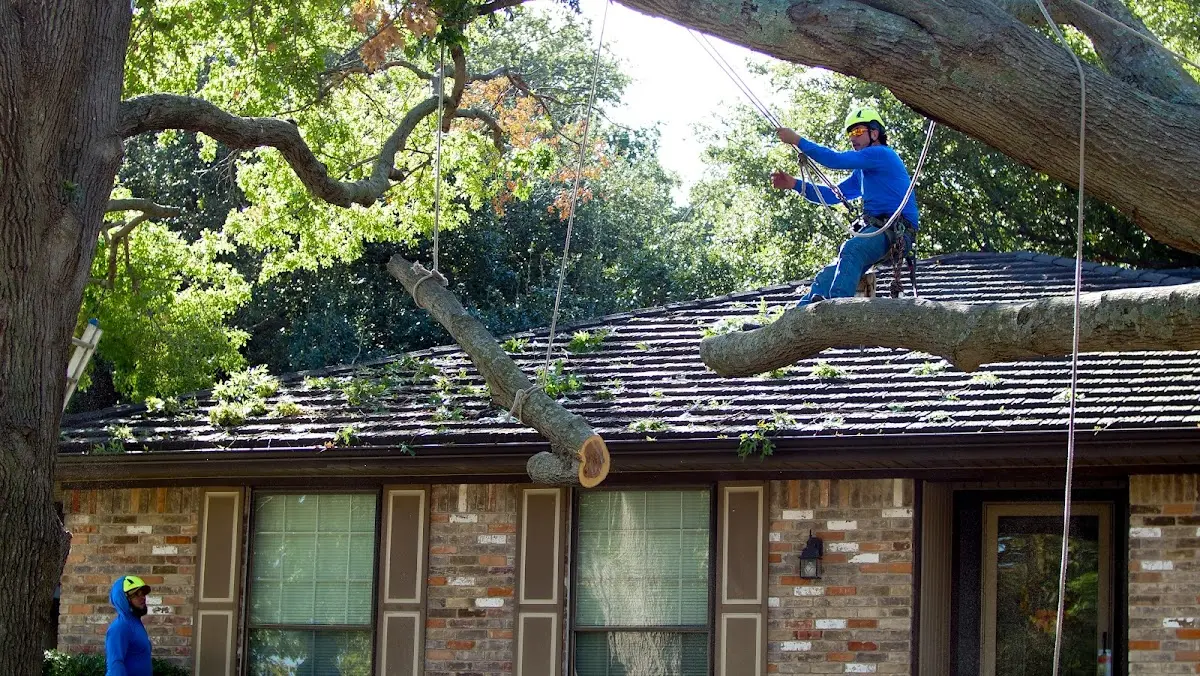
Professional crown reduction for homes and businesses in Durham and surrounding North Carolina communities.
B. Haney and Sons Arborists provides expert crown reduction throughout Durham, NC. Reducing a tree size while preserving its biology is delicate work — every cut must be made at a proper lateral, the percentage removed must stay within recovery limits, and the post-reduction shape must look natural. Our ISA-trained crews handle all three.
Whether you own a single-family home or manage a commercial property in Durham, professional crown reduction is essential for keeping your trees healthy, your property safe, and your insurance liability low. B. Haney and Sons Arborists has completed thousands of crown reduction projects across North Carolina, and our Durham customers benefit from that depth of arborist experience on every job.
We understand that crown reduction can feel uncertain when you are not a tree expert yourself. That is why B. Haney and Sons Arborists makes the process simple for Durham property owners — free written estimates, transparent pricing, full insurance coverage, complete cleanup, and a dedicated crew leader from start to finish. Your satisfaction with the work is our standard.

Our proven crown reduction process delivers reliable results for Durham property owners every time.
B. Haney and Sons Arborists begins every crown reduction project with an on-site assessment. We walk the property with you, evaluate every tree involved, and discuss the recommended approach for your Durham, NC project.
We provide a clear written estimate covering scope, equipment, timeline, and cleanup — no hidden fees. Once approved, we schedule the work at your convenience.
Our Durham crew shows up when promised, sets up the site safely, and works with the equipment and rigging your specific job requires. ISA-trained arborists make every cut intentionally.
B. Haney and Sons Arborists finishes every crown reduction job in Durham with thorough cleanup. We rake the work area, sweep walks and driveways, and leave the site looking better than when we arrived. Final walkthrough always included.
Answers to frequently asked crown reduction questions from Durham property owners.
The cost of crown reduction in Durham depends on tree size, species, access, equipment required, and whether stump removal is included. B. Haney and Sons Arborists provides free written estimates with transparent pricing so you know exactly what to expect before any work begins. We work in a wide range of budgets and never quote blind.
For non-emergency crown reduction in Durham, we typically schedule within 1 to 2 weeks of estimate approval. For emergency tree work, our crews can usually arrive within 1 to 4 hours of the call. Schedules tighten significantly during storm weeks across North Carolina.
Yes. Standard B. Haney and Sons Arborists crown reduction service in Durham includes hauling all branches and brush, chipping small wood, raking the work area, and leaving the site cleaner than we found it. No surprise debris-removal fees on the final invoice.
B. Haney and Sons Arborists crews working crown reduction jobs in North Carolina are led by ISA-trained arborists who follow ANSI A300 pruning standards and ANSI Z133 safety standards. Individual ISA certifications vary by team member, but every crew leader has the training to plan and execute the work properly.
Our reputation is built on results. Here is what our customers have to say.
"The pruning work on our heritage oak was exceptional. The arborist explained which limbs needed to come out for tree health and which to leave for canopy structure. Cuts were made cleanly at the proper collar locations. Tree looks beautiful and well-balanced."
"I have been using B. Haney for our property for years. They prune our maples every other winter and the trees have never looked healthier. There is something to be said for hiring an arborist company that has been doing this since 1940 — the experience shows in every cut."
"The arborist gave honest advice during the estimate — recommended we keep two trees we thought needed removal because they were actually healthy and worth saving. Saved us money and kept the trees. That kind of integrity is rare."